

Discover the Tassili of the Ajjer
In the southeast of Algeria...
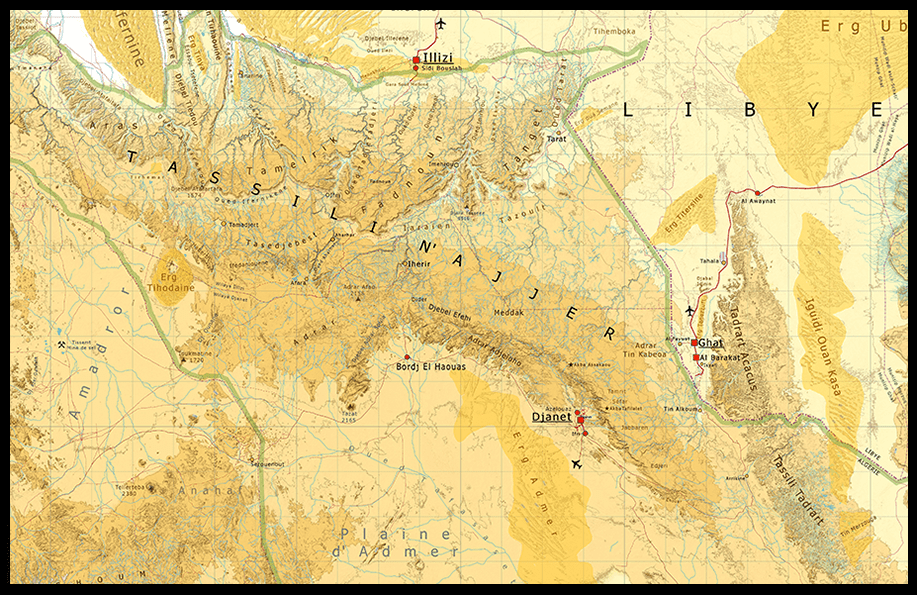
In the southeast of Algeria, more than 2,000 km from the Mediterranean, the Tassili N’Ajjer extends over more than 80,000 km² (larger than Scotland). Bordered by the Ahaggar to the west, Libya to the east, and Niger to the south, it reaches over 2,200 m in altitude. Classified as a UNESCO World Heritage Site since 1982, it is recognized both for the richness of its rock art and for the exceptional value of its landscapes.
The Tassili is a vast sandstone plateau shaped by time into arches, peaks, and vertiginous canyons. Its formations tell millions of years of geological history, while the golden sand dunes that slip between the cliffs highlight the region's increasing aridity. A true open-air museum, it also houses thousands of rock carvings and paintings, witnesses of a once-thriving life now vanished.
The Saharan climate of the Tassili is characterized by rare and unpredictable rains, extreme temperatures, and frequent winds that accelerate evaporation. Once lush and crossed by rivers, it still retains traces of these humid phases in its gueltas, deep valleys, and Mediterranean-origin flora.
The Tassili National Park Office [OPNT]
Guidelines and Recommendations:
1. FOR YOUR SAFETY:
Access, circulation, and visits within the Tassili National Park are regulated and require payment of entrance fees. It is forbidden to travel alone outside authorized roads and tracks. Any site visit must be carried out through a state-approved tour agency or be supervised by a conservation officer of the Tassili N’Ajjer National Park Office.
2. TO PRESERVE WATER:
Water resources in the Sahara are very limited and decrease due to aridity. Water is vital for nomads, livestock, travelers, and wildlife.
- Camping near a water source is prohibited.
- Washing or bathing in the gueltas is prohibited.
- Using detergents or soaps near the gueltas is prohibited.
3. TO PRESERVE THE ENVIRONMENT:
- It is forbidden to change your vehicle oil near a water source or a natural/cultural site. Used oils must be collected.
- Do not leave your campsite dirty before leaving; gather trash, papers, plastics, cans, etc. Bring garbage bags and dispose of them at a public dump after your trip.
4. TO RESPECT THE PRIVACY OF LOCAL POPULATIONS:
- Respect the privacy, customs, and lifestyle of the locals. Human contact will be all the richer.
5. TO PRESERVE NATURAL AND CULTURAL HERITAGE:
The ecological balance of the Tassili is very fragile. Several species of fauna and flora are legally protected. Legislation related to the Tassili National Park and the protection of cultural heritage prohibits:
- Destroying or collecting minerals and fossils.
- Cutting, mutilating, uprooting, or destroying uncultivated plants, including trees and shrubs.
- Capturing, transporting, selling, or buying non-domestic animals, alive or preserved.
- Chasing animals with vehicles, causing death by hyperthermia.
- Hunting with or without firearms.
- Collecting, possessing, selling, or buying any archaeological objects.
- Conducting surveys or excavations without authorization.
- Using any method to wet, overload, scratch, inscribe graffiti, cut, or damage rock carvings or paintings.
- Damaging any archaeological, prehistoric, or historic site.
SOURCE: OPNT (Tassili National Park Office)